Budget Organisation
How to Set a Realistic Budget for Small-Space Organisation
A step-by-step way to plan what to spend on organising your home, starting with what you already own.
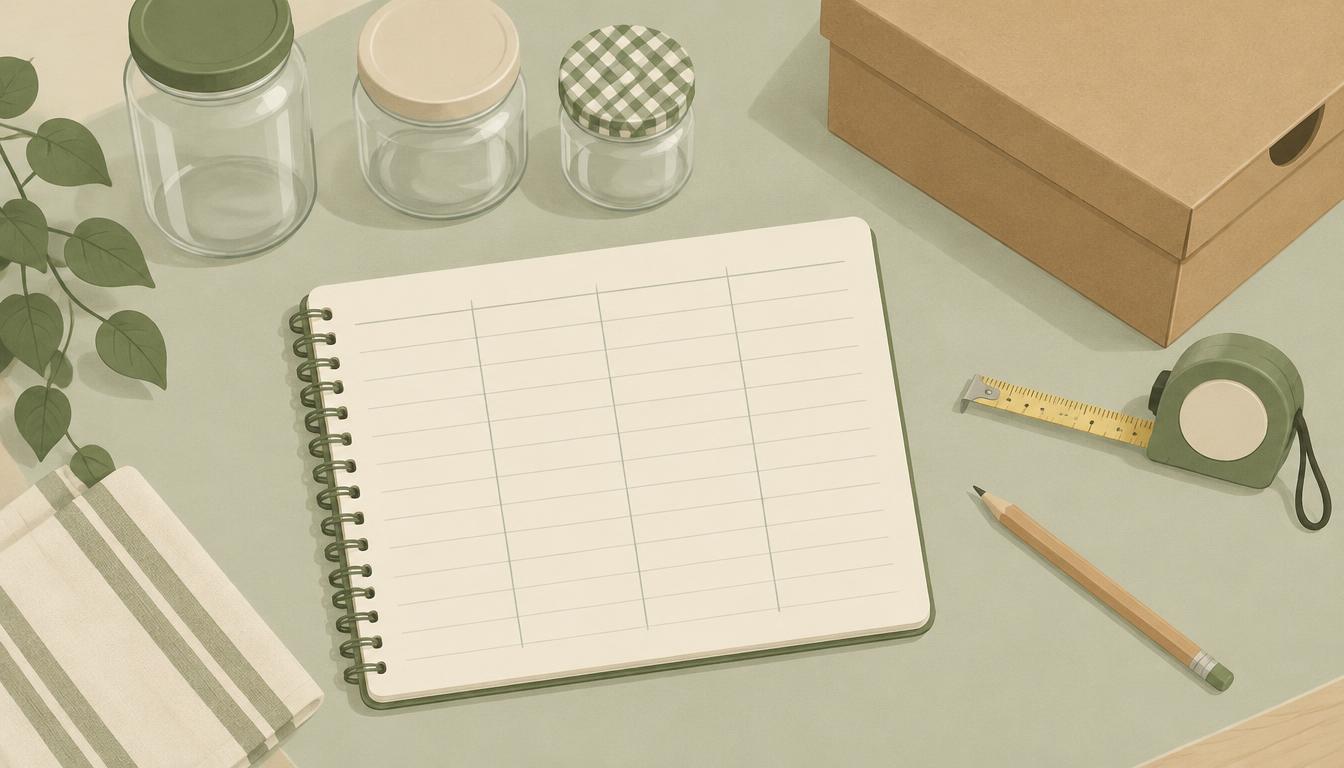
Planning guide — a budgeting method, not a costed project. Any figures you note down are your own; this guide suggests no amounts.
It's easy to spend money on storage and end up with more things to store. A budget helps you solve the problems that actually bother you, using what you already own first. This guide sets out one way to plan, buy and review. If you're new to the site, our step-by-step starting guide shows how our guides fit together.
1. Take stock and declutter first
Before deciding what to buy, find out what you're storing. Work through one area at a time and remove things you no longer use, need or want. Our 7-day decluttering checklist breaks this into short daily tasks.
As you go, put spare boxes, baskets, jars and containers to one side. They're your starting stock.
2. List and rank the problem areas
Write down the places that cause trouble day to day — the wardrobe you can't close, the drawer where cutlery gets jumbled, the hallway where shoes pile up. Then rank them by how much they affect you. Spending on the top two or three usually makes more difference than spreading a little everywhere.
3. Set a spending limit
Decide on an overall amount you're comfortable spending, and when. It can help to split it:
- Most of the money for your top-priority area.
- A smaller amount for the next one or two areas.
- A small reserve for things you only discover you need once you start.
If you'd rather not spend anything yet, that's a valid budget too: finish the free steps first and see what's still a problem.
4. Measure before you buy
Many storage purchases fail because they don't fit. Measure shelves, cupboards, drawers and floor space, and record the measurements on the room measurement worksheet. Take the figures with you, or keep them on your phone, when you shop.
5. Reuse suitable items you already own
Check your starting stock against each problem. Shoeboxes can become drawer dividers — see our guide to cardboard kitchen drawer dividers for when that works and when it doesn't. Spare hangers, baskets and jars might solve smaller problems. Only reuse items that are clean, sturdy and safe for what you'll put in them; cardboard, for example, isn't a good choice anywhere it might get wet.
6. Compare real, current prices
For anything you still need, check two or three retailers, note the price and the date you checked, and include delivery costs. Prices and stock change, so treat any older note as out of date. Check dimensions, materials and returns policy as well as price — a cheaper item that doesn't fit isn't a saving.
7. Track what you spend
Record each purchase against your plan. Our DIY project budget planner has columns for estimated and actual costs. A simple worksheet might look like this:
| Area | Problem | Plan | Estimate | Actual |
|---|---|---|---|---|
| Wardrobe | Can't see clothes | Declutter, reuse spare hangers, one shelf divider | ||
| Kitchen drawer | Cutlery mixed up | Cardboard dividers from shoeboxes | ||
| Reserve | Unexpected needs | Hold back |
8. Avoid repeat purchases
- Keep a short list of what you already own and where it is.
- Wait a day or two before buying anything not on your plan.
- Don't buy storage for an area until you've finished decluttering it.
- Keep receipts until you're sure an item fits and works.
9. Review the results
After a few weeks, look again at your ranked list. Ask whether each problem is solved, partly solved or unchanged, compare what you spent with your estimate, and decide whether the next area needs money or just time.
Next steps
If your wardrobe is top of the list, read how to organise a small wardrobe on a budget. For more ideas, browse budget organisation.
You might also like
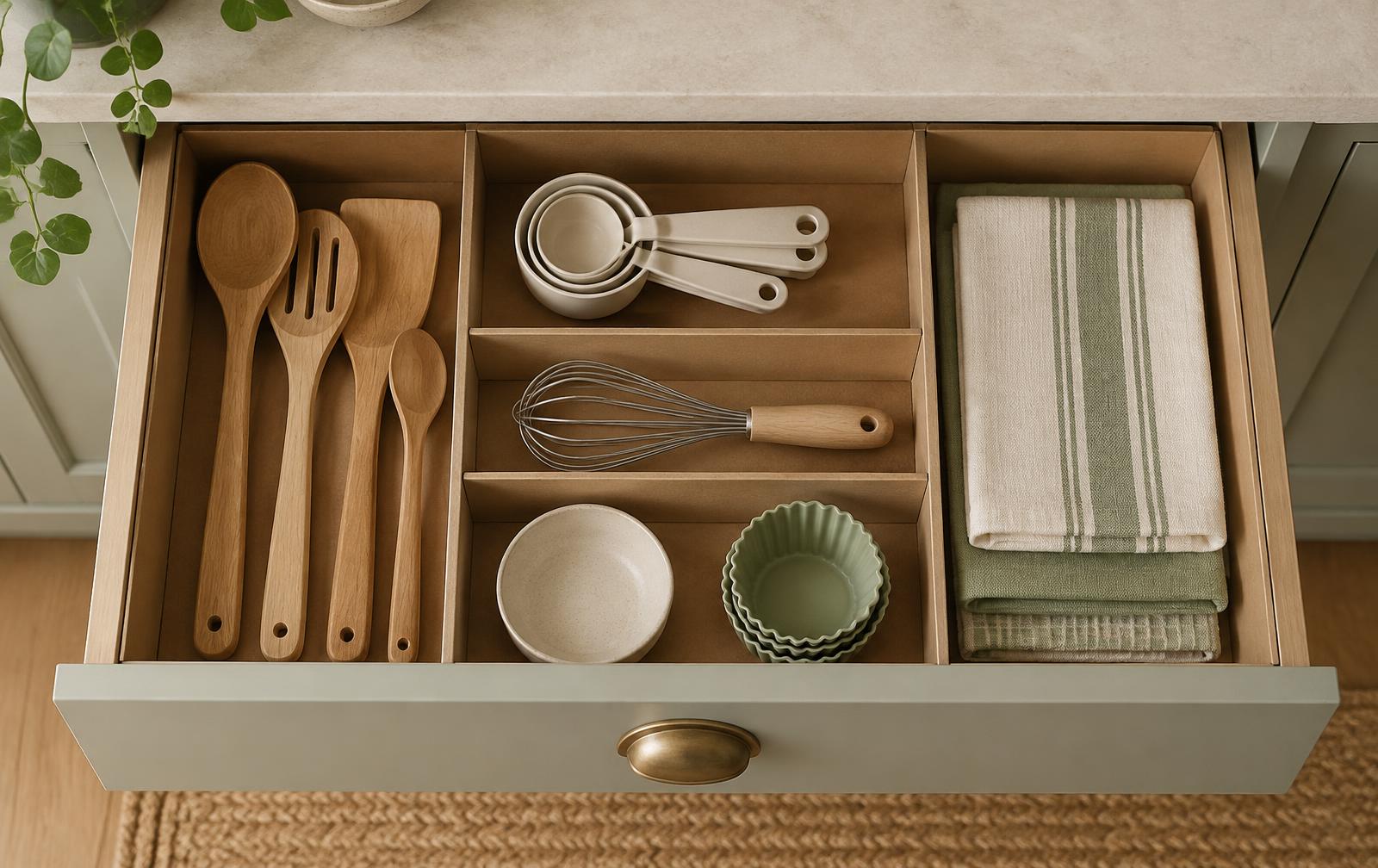
Cardboard Kitchen Drawer Dividers: When They Work and How to Plan Them
When cardboard drawer dividers make sense, how to plan compartments around what you store, and the safety and hygiene limits to know first.
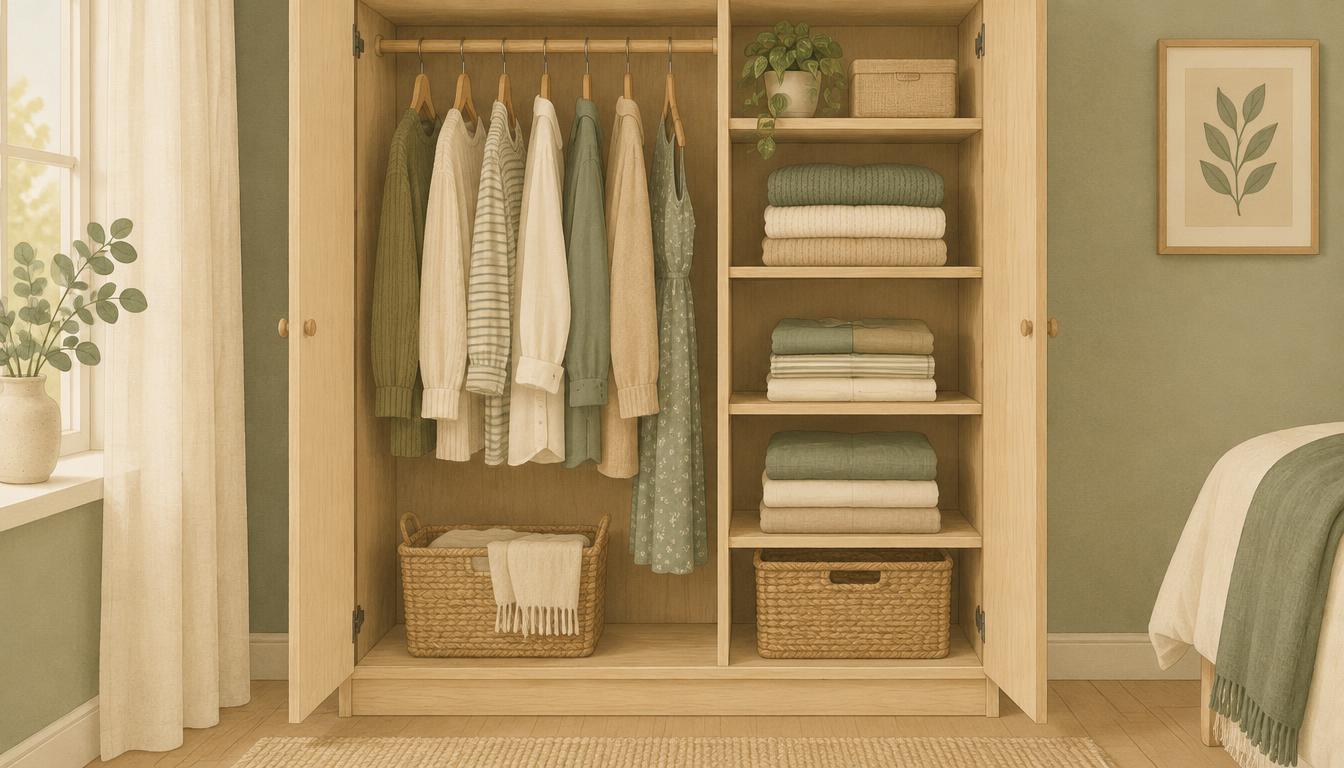
How to Organise a Small Wardrobe on a Budget
Organising a small wardrobe on a budget starts with arranging the clothes you use, not buying a matching set of organisers. Work with the rail, shelves and floor space you already have, and only add storage when you know what it needs to hold.
Make Room for What Matters
Download the free 7-day small-space decluttering checklist — no email address needed.