Budget Organisation
How to Organise a Small Wardrobe on a Budget
Organising a small wardrobe on a budget starts with arranging the clothes you use, not buying a matching set of organisers. Work with the rail, shelves and floor space you already have, and only add storage when you know what it needs to hold.
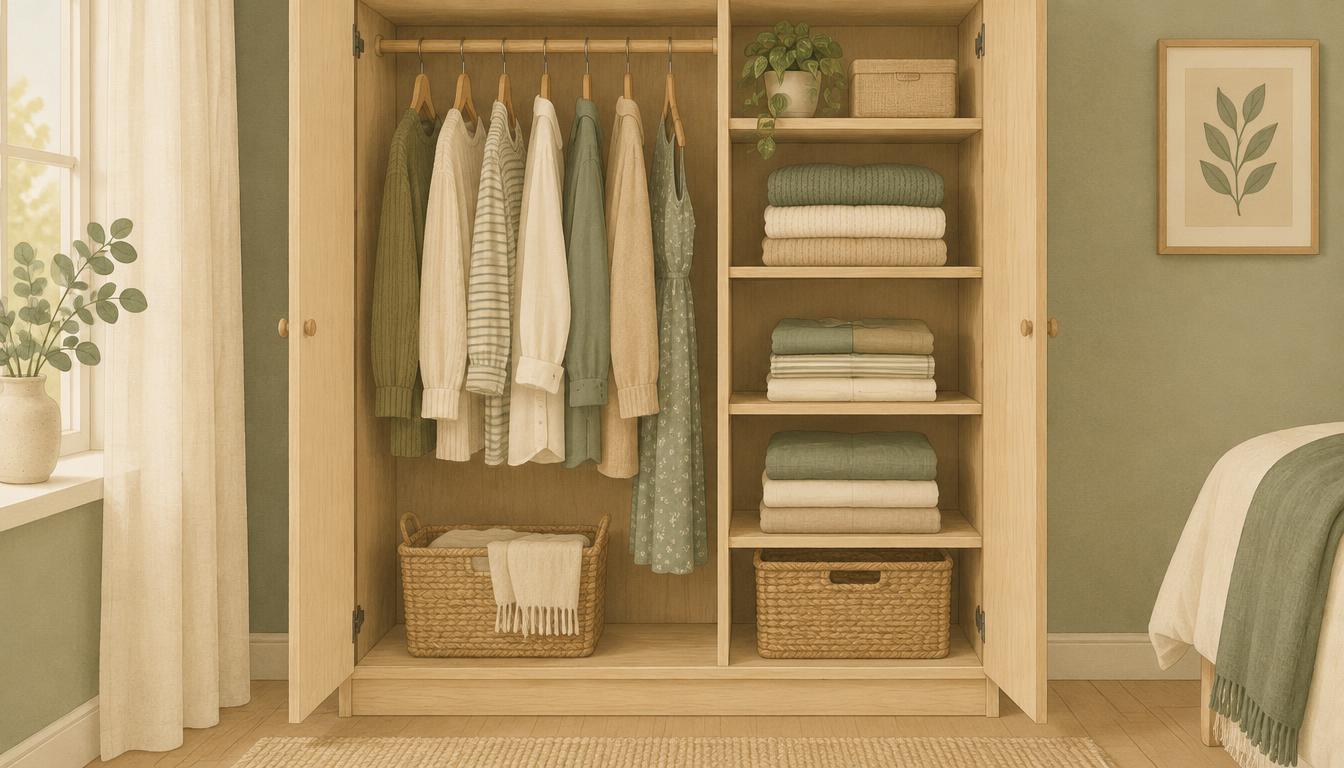
A small wardrobe usually feels full because of how things are arranged, not only because of what's in it. This guide works through sorting, hanging, folding and measuring in that order, so any money you spend goes on a problem you've actually identified.
Start with one manageable wardrobe edit
Choose a section you can finish and put back the same day. Sort its contents into clothes you wear, items that need repair or cleaning, and things you no longer want. Avoid setting an arbitrary number of items to keep: the aim is a workable wardrobe for your own routine.
Use the wardrobe day in the 7-day decluttering checklist if a short session feels more manageable. Return clean, dry clothes and deal with the other groups separately.
Give hanging and folded clothes different homes
Use the rail for clothes you prefer to hang
Group similar garments so you can see what you have. Check that hangers suit the garment and fit the rail. Reuse serviceable hangers before buying new ones; matching hangers are optional, not a requirement for an organised wardrobe.
Do not overload a rail. Follow the furniture manufacturer's guidance, particularly before adding a second rail or a hanging organiser.
Keep folded items accessible
Put everyday folded clothes on shelves or in drawers you can reach comfortably. Smaller groups can be easier to retrieve without disturbing everything else. A clean, dry box you already own may help separate socks or scarves, provided it fits and supports its contents.
For a dry drawer, low-cost cardboard dividers can separate small items. That guide is written for kitchen drawers, but the same measuring and planning steps apply.
If you want to store clothes upright in a drawer, try it with a few items first. Fold them to fit the drawer's height and check that you can identify each item without forcing the drawer shut.
Measure before adding organisers
Record shelf width, depth and usable height, plus the opening through which a box must pass. Include hinges, drawer runners and any doors that need to close. Use the room measurement worksheet rather than assuming storage advertised as compact will fit.
Do not place a tall pile of boxes above head height or put heavy items on weak shelves. Keep furniture stable and use any anti-tip restraints required by its manufacturer.
Spend only on a specific problem
- Write down the problem, such as socks mixing together or folded clothes falling off a shelf.
- Try changing the arrangement using what you own.
- Measure the remaining gap and list the features you need.
- Compare the full cost, including delivery or required fittings, before buying.
Use the project budget planner to record actual costs. There is no fixed price or promised saving here: product costs and your existing supplies vary. For a wider plan, set a realistic organisation budget.
Use spare space without creating obstructions
Check the wardrobe floor for an accessible place for shoes or a small container. Door storage is only suitable when the product fits, the door operates normally and the manufacturer's limits are respected. Do not block essential hardware or create unstable stacks.
If the wardrobe remains crowded, move less-used items to another appropriate location rather than forcing more onto the rail. The hidden-storage starting checklist can help you assess spare storage nearby.
Make upkeep part of your routine
Return clothes to their assigned groups after laundry. When one area stops working, adjust that section before purchasing more organisers. Keep everyday clothes within reach and reassess seasonal items when your needs change.
What if I cannot buy any organisers?
Start with sorting, grouping and reusing suitable containers. You can improve access without changing the furniture or buying matching products.
Is a small wardrobe the same problem as having no closet?
No. This guide assumes you already have wardrobe furniture. A bedroom with no built-in clothes storage needs a different plan for where the rail or furniture will go — see our guide to storage ideas for rooms without a built-in wardrobe.
You might also like
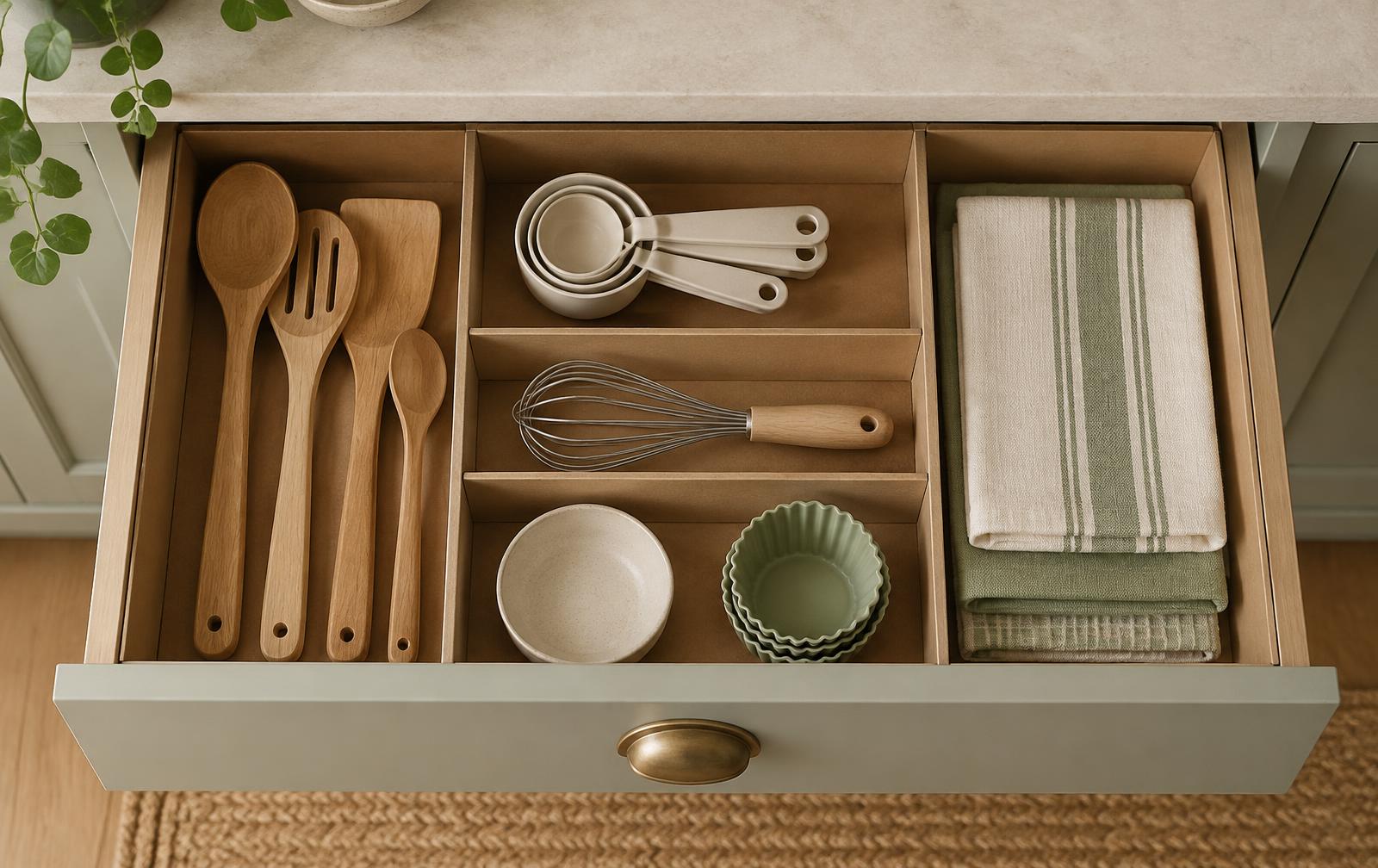
Cardboard Kitchen Drawer Dividers: When They Work and How to Plan Them
When cardboard drawer dividers make sense, how to plan compartments around what you store, and the safety and hygiene limits to know first.
How to Set a Realistic Budget for Small-Space Organisation
A step-by-step way to plan what to spend on organising your home, starting with what you already own.
Make Room for What Matters
Download the free 7-day small-space decluttering checklist — no email address needed.