DIY Projects
Shoe Storage Ideas for a Narrow Hallway
Slim, vertical and renter-friendly shoe storage ideas for a narrow hallway — starting with walkway clearance, door swing and safe placement.
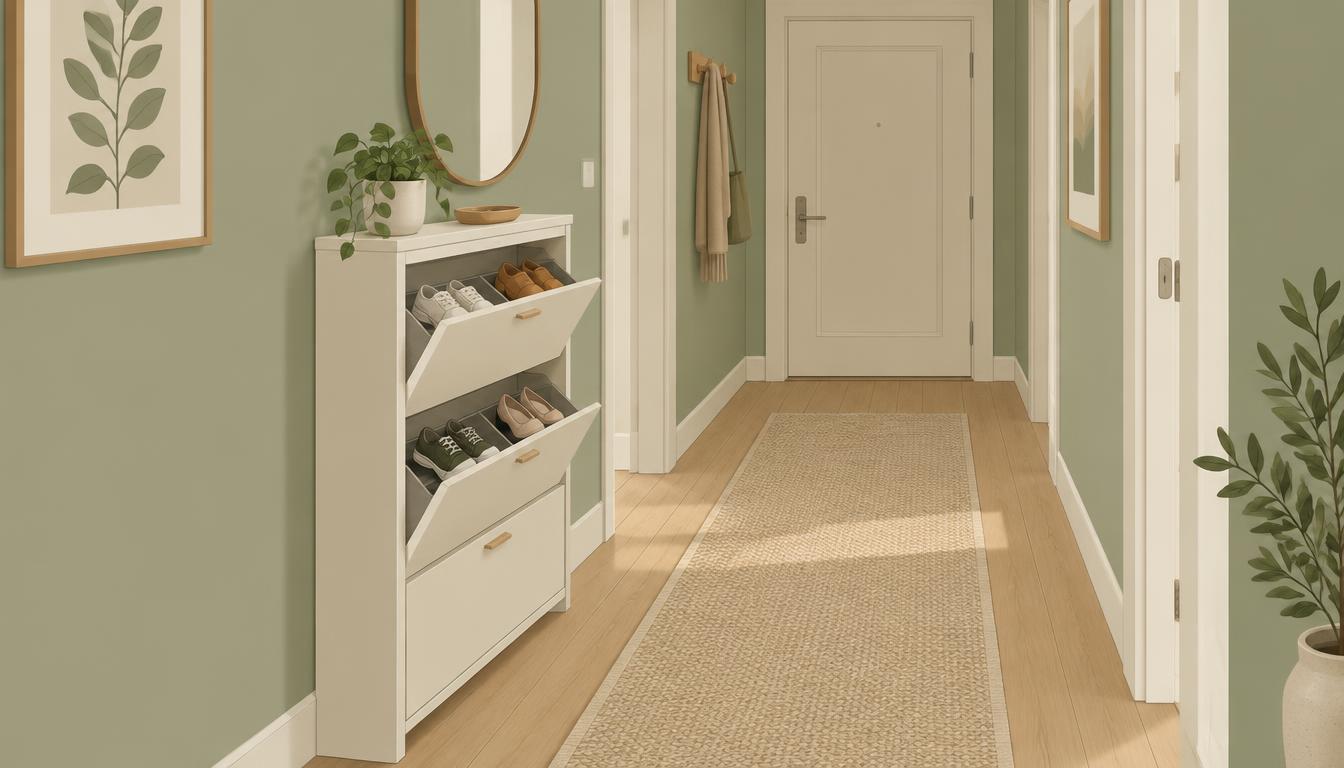
A narrow hallway has to work as a corridor first and a storage space second. Shoes pile up there because it's where they come off — but the wrong unit turns the route through your home into an obstacle course. This is an ideas and planning guide: measuring, slim storage options, renter considerations and safe placement, rather than a step-by-step build.
Measure the walkway and door swing first
Before looking at any product, measure the hallway width and check every door that opens into it, including the front door's full swing. Whatever you add must leave a comfortable walking route and must never obstruct an escape route — in an emergency you need to get out quickly, and so does anyone visiting. Note radiator positions and skirting depth too; both affect how flush a unit can sit. The room measurement worksheet is a good place to record all of this.
Slim and vertical options worth measuring for
Purpose-made slim shoe cabinets are designed for exactly this situation, with tipping drawers that hold shoes at an angle. Depths vary between models, so compare the stated depth against your measurements rather than assuming "slim" means it fits. Other options:
- Vertical racks: several short shelves stacked tall use height instead of floor width — the same principle as vertical storage in tiny rooms.
- A narrow bench with storage: seating plus shoe space in one footprint, if the width allows.
- Wall-adjacent trays or racks: the simplest option, and easy to move for cleaning — worth it if wet shoes are a regular feature of your winters.
Follow the manufacturer's assembly guidance and use any wall-fixing or anti-tip fittings supplied, particularly for taller units.
If you rent
Freestanding units, trays and over-door racks need no fixing at all, which keeps things simple with a landlord. If you're considering anything that attaches to a wall, read the questions to ask before a renter-friendly DIY project and check your tenancy agreement first. Adhesive-fix products vary widely in what they hold and how cleanly they remove, so treat them cautiously for anything load-bearing.
How many pairs actually need to live there?
Only everyday shoes need hallway space. Occasional pairs — wellies, heels, football boots — can go elsewhere, which shrinks the unit you need. Under-bed storage is a natural overflow spot in small homes. A pairs-per-person limit, agreed with everyone in the household, keeps the hallway unit from slowly refilling.
Placement is a safety decision
In a narrow corridor, where the unit sits matters as much as which one you choose. Keep it out of the door swing, make sure it can't rock or tip when a drawer is pulled open, and avoid anything with sharp corners at hip or head height on the walking line. And if the hallway is dark, a shoe pile on the floor is a trip hazard at night — which is the best argument for giving shoes a proper home in the first place. Start by counting the pairs in daily use and measuring the gap; those two numbers will narrow your options faster than any product page.
You might also like
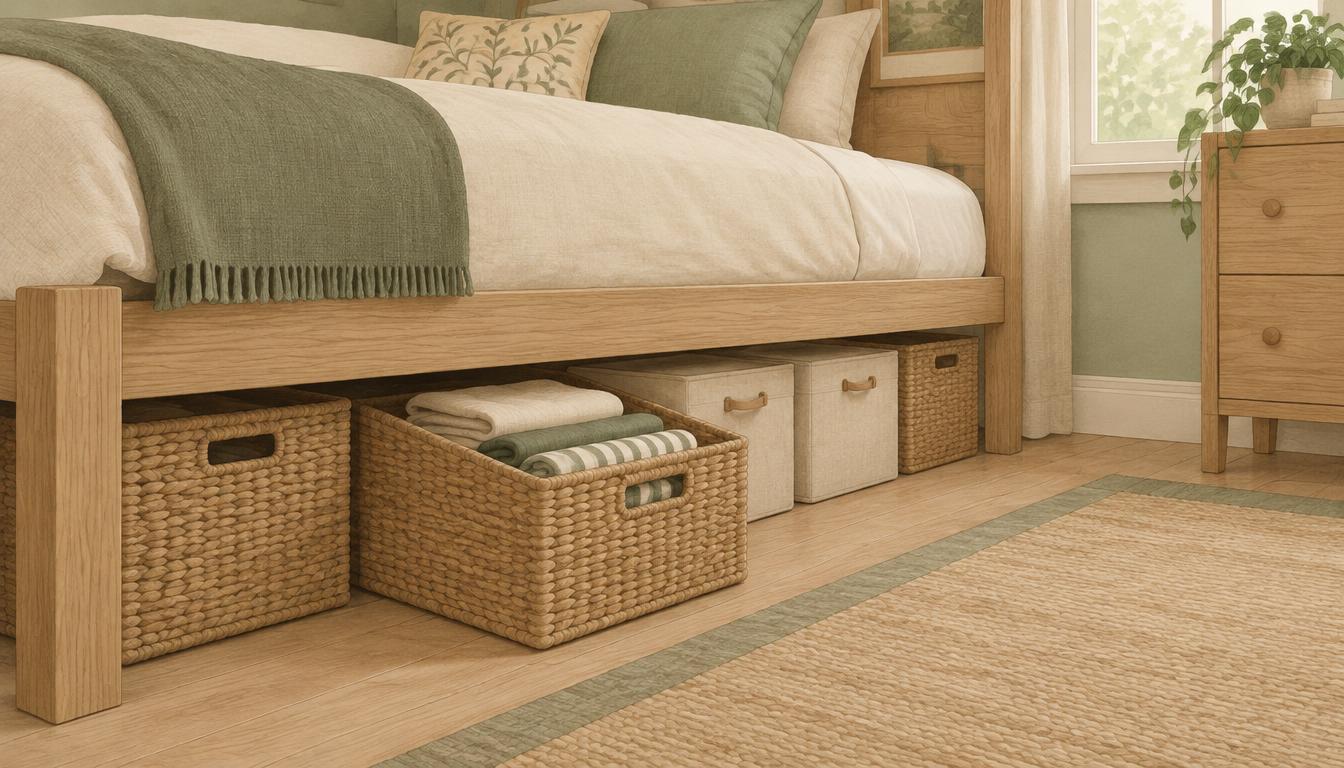
Under-Bed Storage for Small Bedrooms: Measure, Choose and Organise
How to measure the usable space under a bed, choose containers that fit through the gap, and decide what is worth storing there.
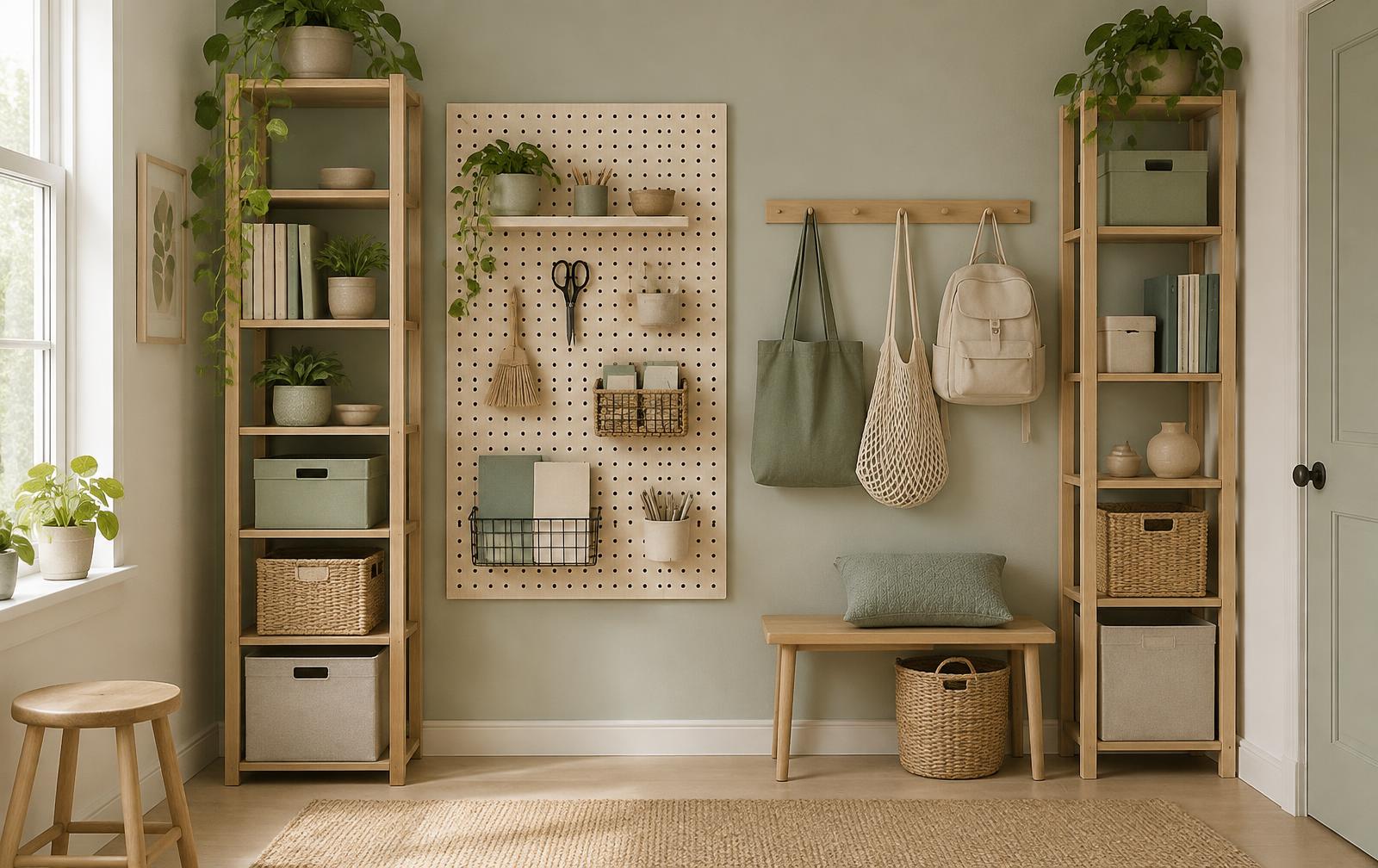
Vertical Storage Ideas for Tiny Rooms: What Goes Where
Work out which walls in a tiny room can safely take storage, which heights suit which items, and when to choose shelves, towers, pegboards or over-door options.

Start Here: Making the Most of Your Small Space
New here? This page points you to the most useful places to start: quick wins, project planning, renter-friendly DIY, storage guides and free printables.
Make Room for What Matters
Download the free 7-day small-space decluttering checklist — no email address needed.