DIY Projects
Under-Bed Storage for Small Bedrooms: Measure, Choose and Organise
How to measure the usable space under a bed, choose containers that fit through the gap, and decide what is worth storing there.
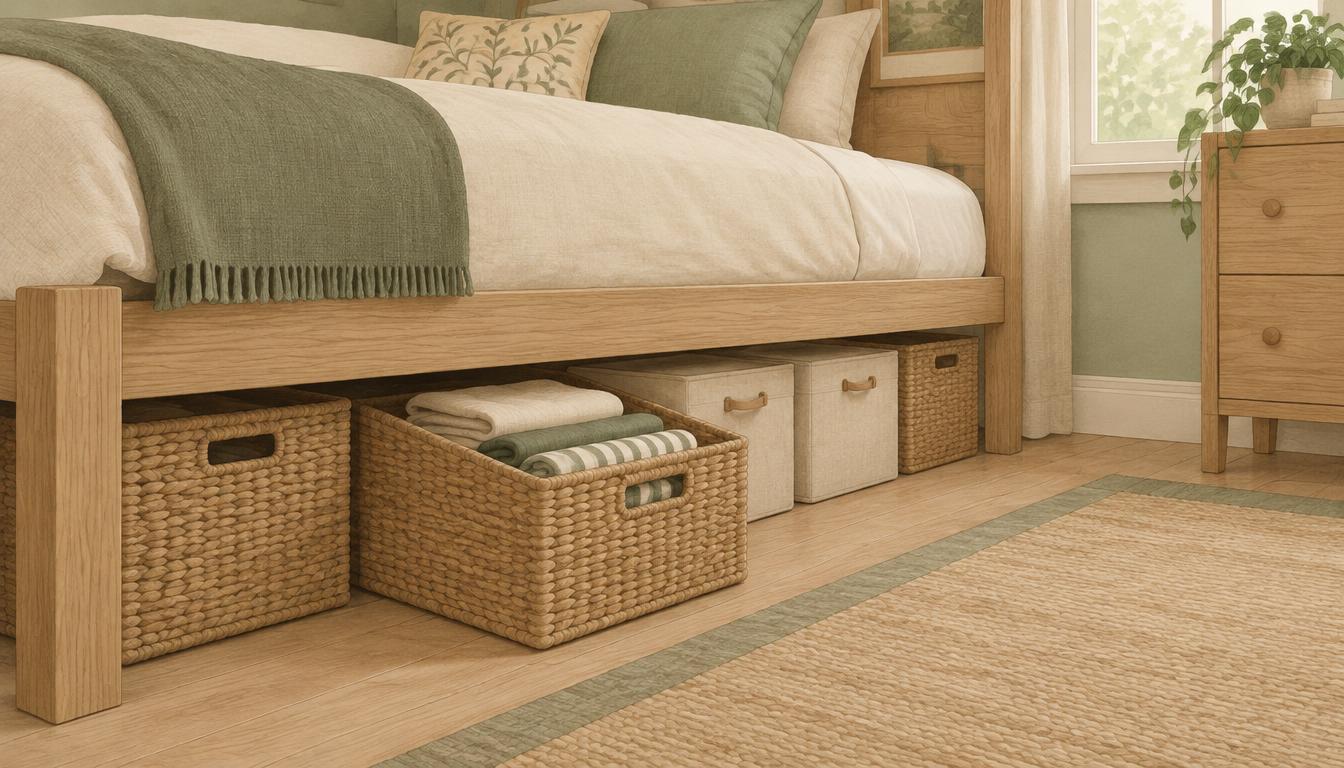
The space under a bed is useful for things you don't need every day, but only if you can get them out easily. This guide covers how to measure the space properly, pick containers that suit it, and decide what to keep there. For a whole-room plan, start with our guide to bedroom storage when there's no wardrobe. This page deals only with the space under the bed.
Step 1: Measure the space you can actually use
The height of a bed frame and the usable gap underneath are often different. Side rails, centre supports, slats and legs all reduce the space you have. Write down three figures for each side you can reach:
- Clearance: floor to the lowest obstruction, such as a rail, support bar or slat.
- Opening width: the narrowest gap a container has to pass through, usually between legs or supports.
- Reach depth: how far in you can comfortably reach from that side, kneeling or crouching.
Measure each side on its own. A bed against a wall may only be reachable from one side and the foot end. Record the figures on the printable room measurement sheet so you can check them against a product's external dimensions when you shop.
Before you buy anything, clear the space, vacuum it and look for damp, mould, pests or damage. Check your bed's and mattress's instructions too. Some say how much space must stay clear for airflow, and some ottoman or divan designs don't allow other storage underneath.
Step 2: Decide what belongs under the bed
The space under a bed is low, hard to reach and collects dust, so it's best for clean, dry items you need now and then. It's a poor home for things you need daily.
Usually good choices
- Out-of-season clothes, once they are clean and fully dry
- Spare bedding and towels
- Shoes you wear now and then, kept in a bag or box
- Light hobby supplies or keepsakes in labelled containers
Better stored somewhere else
- Things you use every day: getting them out each time soon becomes a chore
- Heavy items that are awkward to drag or lift from floor level
- Anything damp, anything that could leak, and anything that needs ventilation or temperature control
- Important papers you might need in a hurry
Use the small bedroom organisation planner to list the groups you want to store, so you know what each container is for before you choose it.
Step 3: Choose the right type of container
Compare containers by how they fit through the opening and how they behave when full, not only by the capacity printed on the label.
- Rigid lidded boxes keep their shape and help keep dust off. Check the lid clears the bed when opened, or plan to slide the box out fully first.
- Fabric bags with zips fit low gaps and fold away when empty. They only hold their shape when filled, and they give less protection from crushing.
- Ready-made wheeled boxes are easier to pull out across hard floors and some carpets. The wheels add height, so check the total height against your clearance figure.
- Reused boxes you already own can work for light, dry items if they are clean and sound. Cardboard soaks up moisture and weakens, so avoid it where there's any chance of damp and replace it once it's worn.
If your bed has a centre support, two or three smaller containers usually work better than one long one. Each one is lighter to move, and you can pull out one group of items without disturbing the rest.
Step 4: Arrange the space for easy access
- Put the things you'll want first nearest the side you reach from.
- Label the end of each container that faces out, so you can read it without pulling it out.
- Leave a little room on either side of each container so it doesn't snag on the legs.
- Keep items away from any lifting mechanisms, cables or heaters.
- Pull a filled container in and out once. If it's a struggle, take some things out or split them into two containers.
Common mistakes to avoid
- Buying by bed height: the frame height isn't the gap under the slats or rails.
- Ignoring the lid: a box can fit underneath and still not open where it sits.
- Overfilling: a heavy container dragged along the floor can damage flooring and strain your back.
- Storing things damp: clothes and bedding should be clean and completely dry before they go in.
- Raising the bed without checking: only use bed risers or change the frame if the bed's manufacturer says it's suitable.
A note on making your own rolling drawer
Some people fit wheels to a crate or box to make a rolling drawer. Whether that's safe depends on the box material, the fixings, the wheels' rated load and the finished height, so there is no one method that suits every bed. Tidy Trellis hasn't tested a build for this guide, so we haven't given step-by-step instructions or measurements. If you're thinking about it, use parts rated for the weight you plan to store, follow the makers' fixing instructions, and check the finished height against your clearance figure. A ready-made wheeled box is the simpler option.
Keep it working
Every few months, pull the containers out, clean the floor and check for damp or wear. When the seasons change, swap clothes between the bed and your wardrobe rather than adding more containers. If the space is full and still not enough, look around the rest of your home with the hidden-storage checklist.
Do I need to buy new containers?
Not always. Try what you already have against your measurements first. If you do need something, set a realistic budget for the specific gap you're filling.
Is under-bed storage suitable for renters?
Usually, because freestanding containers don't change the property. If the bed belongs to your landlord, check before raising it or altering it. More generally, check before you build or fix anything in a rented home.
You might also like
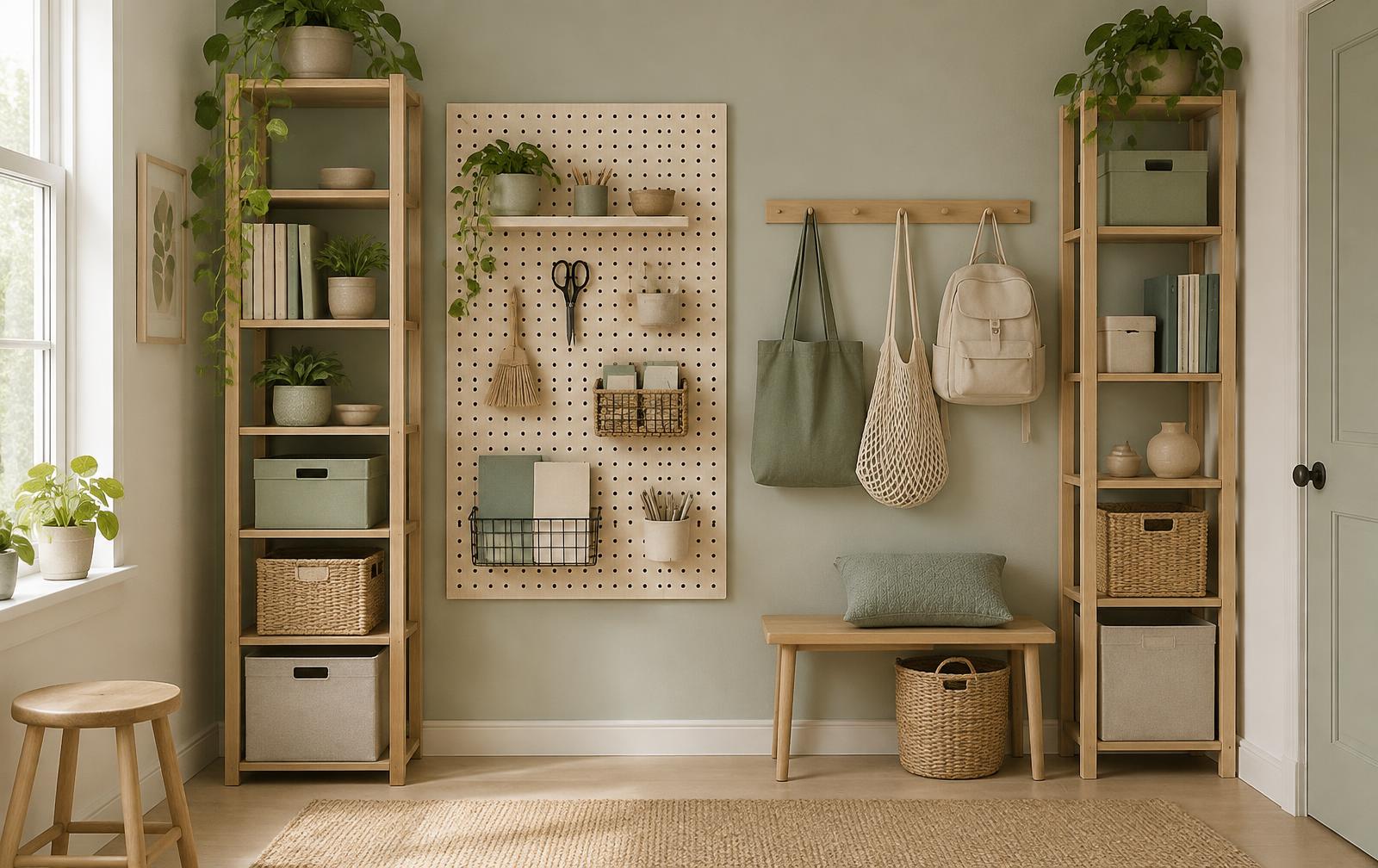
Vertical Storage Ideas for Tiny Rooms: What Goes Where
Work out which walls in a tiny room can safely take storage, which heights suit which items, and when to choose shelves, towers, pegboards or over-door options.
Start Here: Making the Most of Your Small Space
New here? This page points you to the most useful places to start: quick wins, project planning, renter-friendly DIY, storage guides and free printables.
Make Room for What Matters
Download the free 7-day small-space decluttering checklist — no email address needed.