Renter-Friendly DIY
No-Drill Wall Storage Ideas for Renters
Freestanding, over-door, tension and adhesive storage for renters — what each approach can and cannot do, with no damage-free promises.
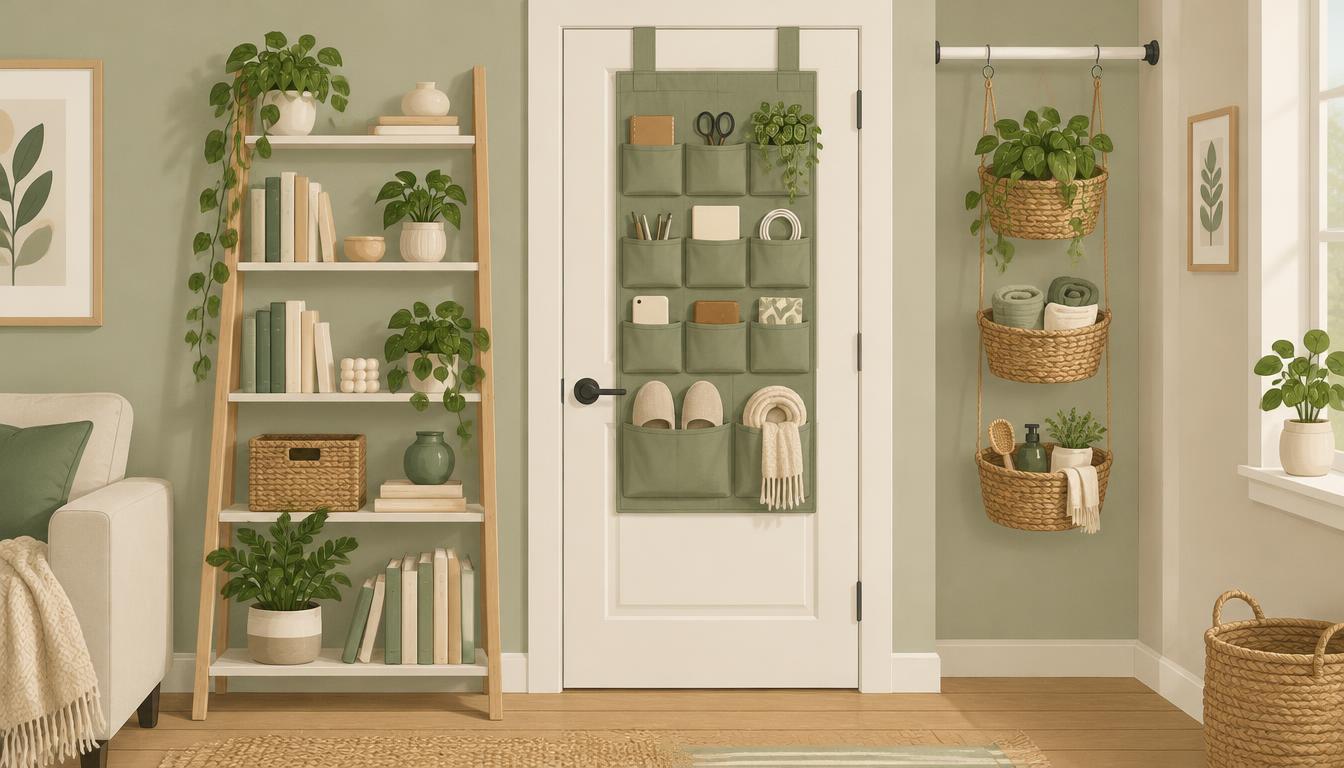
Wall storage usually means drilling, and drilling usually means asking your landlord. No-drill approaches — freestanding, over-door, tension and adhesive — can add real storage without touching a wall, but each comes with honest compromises. Here's what each can and can't do, so you can choose before you spend.
Start with permission, not products
Even no-drill storage can affect a rented home: an over-door hook can mark a frame, and an adhesive pad can pull paint when it's removed. Read your tenancy agreement and the questions to ask before a renter-friendly DIY project before committing. A quick message to your landlord or agent about what you're planning is often easier than a deposit discussion later.
Freestanding and leaning storage
Bookcases, ladder shelves and étagères that stand on the floor need no wall fixing at all. Ladder-style shelves lean against the wall but rest on the floor, so they suit light to moderate loads — books, plants, folded towels. Check stability on your flooring, follow the assembly instructions, and use any anti-tip fittings supplied, especially in homes with children or pets.
Over-door storage
Hooks, racks and pocket organisers that hang over a door turn wasted space into storage for coats, accessories, shoes or toiletries. Check three things before buying: the door's thickness against the bracket, the gap at the top so the door still closes, and the clearance behind the door when it opens. Keep loads light — a door is not a wall.
Tension rods and poles
Tension rods fit inside alcoves, between cabinets or across a recessed window to hang lightweight storage; floor-to-ceiling poles can carry small shelves or baskets. They hold through friction alone, so they need firm, even surfaces at both ends and modest loads. Re-check the tension after the first few weeks and after any bump.
Adhesive fixings — the honest limits
Adhesive hooks, strips and caddies have improved a great deal, but "no nails" doesn't mean "no limits". What they hold depends on the product's stated weight rating, the surface (smooth and clean beats textured or dusty), and how carefully you follow the fitting instructions, including any curing time before loading. Removal is usually clean on sound paintwork, but it isn't guaranteed on every surface — test somewhere hidden first. Avoid adhesive fixings for anything heavy, fragile, or above a bed or cot.
Match the fix to your home, not the packaging
The right no-drill solution is the one matched to your measurements, your surfaces and your tenancy — not the one with the boldest claim on the box. Measure the space, decide what will live there, and weigh it if you're anywhere near a product's stated limit; the room measurement worksheet keeps the numbers in one place. For ideas about which walls and corners earn their keep, vertical storage ideas for tiny rooms and the hidden storage checklist are good next reads.
You might also like
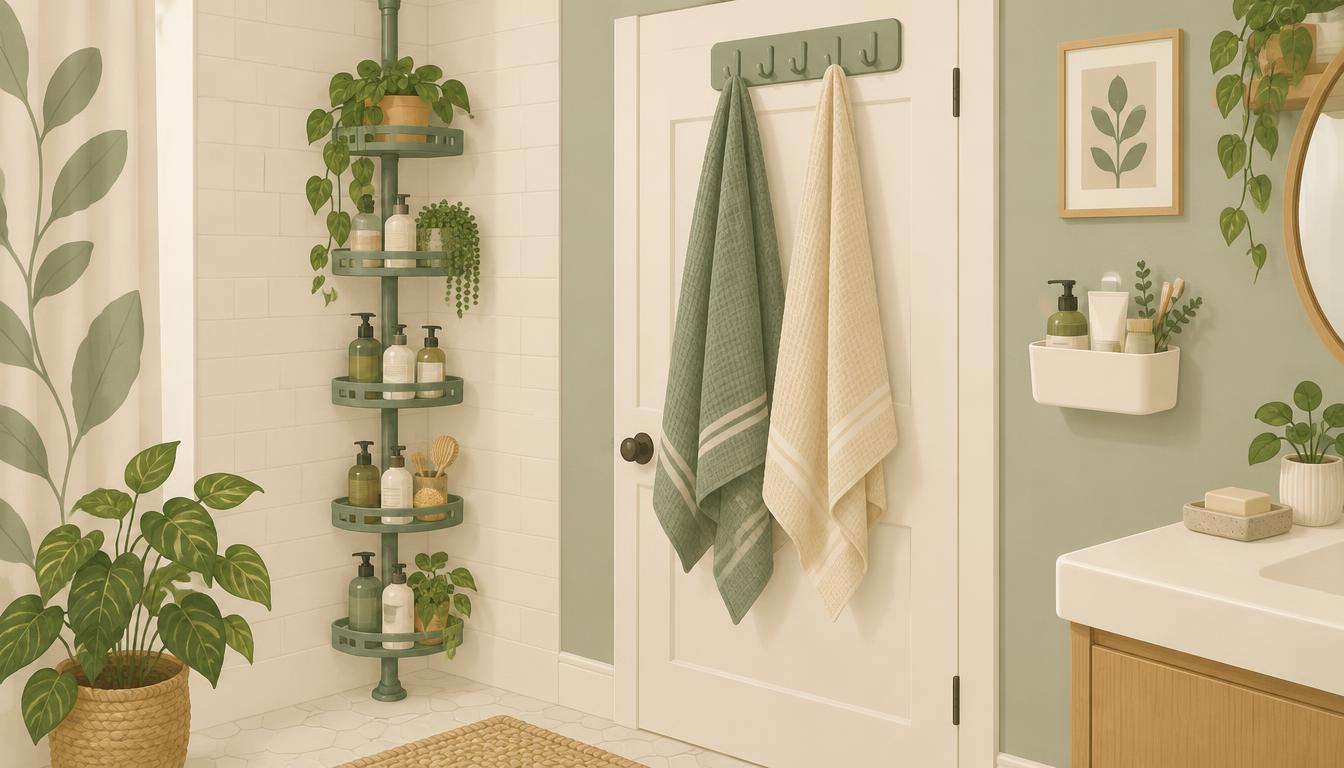
Removable Storage Solutions for Small Bathrooms
Removable bathroom storage that respects your tenancy and survives steam: what works, what to avoid, and how to plan before you buy.
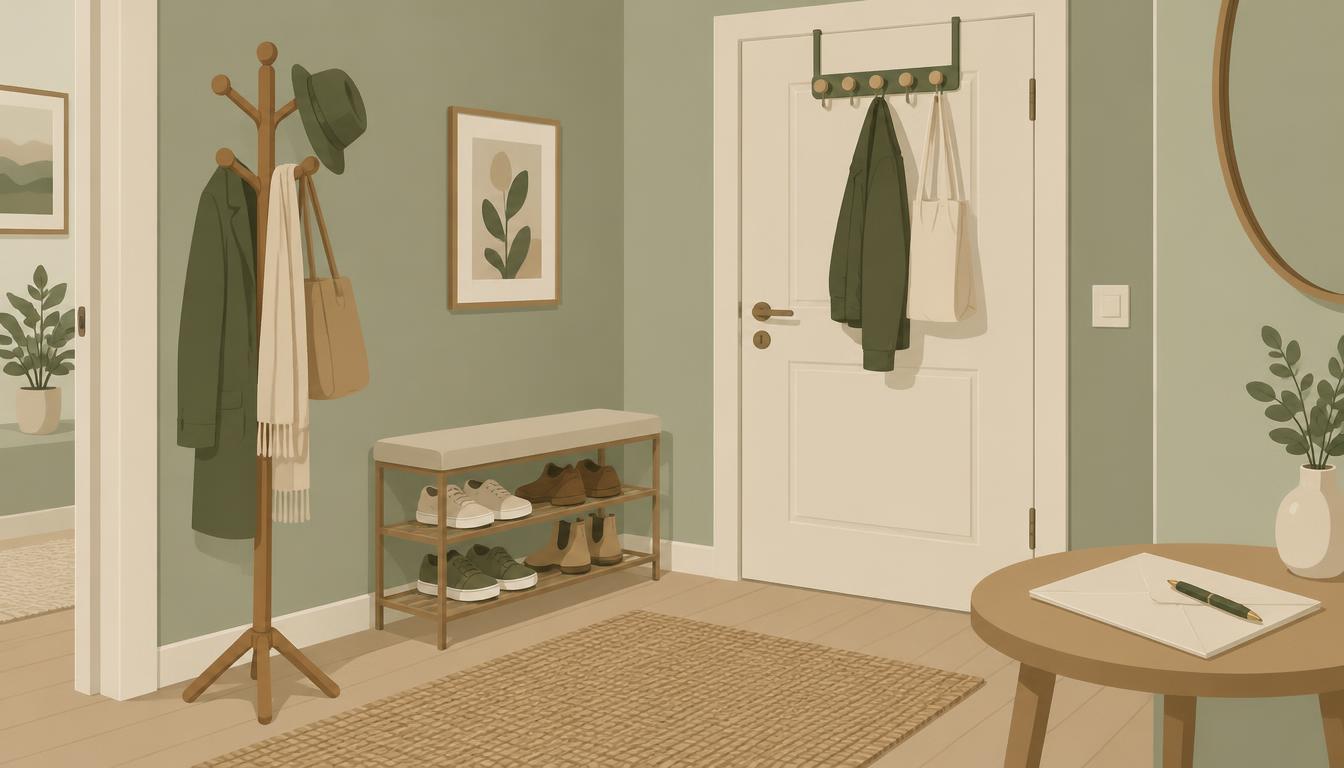
Renter-Friendly DIY: Questions to Ask Before You Start
The questions to work through before any renter-friendly upgrade in a rented home, with links to official guidance.
Make Room for What Matters
Download the free 7-day small-space decluttering checklist — no email address needed.