Small Space Storage
Where to Find Hidden Storage in a Small Home: A Room-by-Room Checklist
Walk round your home room by room and find the storage space you already have, before buying anything new.
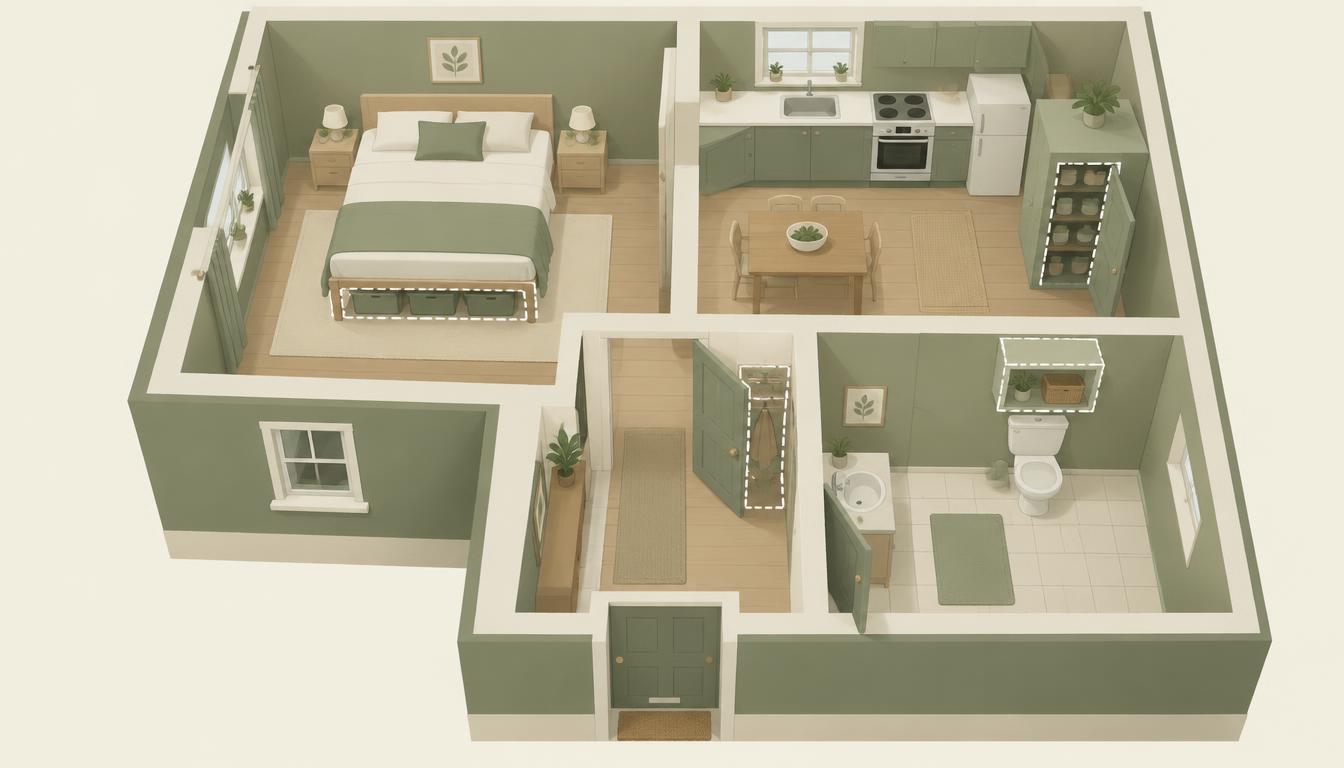
Planning checklist — a starting point for walking round your home, not a step-by-step project. Each room links to a more detailed guide where we have one.
Before buying new storage, it's worth looking at the space you already have. Take a notepad, a tape measure and our room measurement worksheet, and go through your home one room at a time.
How to use this checklist
- Walk round each room and note every spot that could hold something.
- Measure each one and note anything in the way, such as pipes, sockets, radiators or skirting boards.
- Check the safety and access notes for that room.
- Read the linked guide for detailed planning before you buy anything.
Bedroom
Where to look
- Under the bed.
- The back of the bedroom door.
- Wall space above a desk, chest of drawers or bed.
- Unused height inside the wardrobe, or a corner where a wardrobe could go if you don't have one.
What to measure
Clearance under the bed frame, including the lowest point such as a centre rail. Door thickness and the gap above it for over-door racks. Inside wardrobe height and depth.
Safety and access
Leave a clear route to the door and window. Keep heavy items low and make sure anything under the bed can be pulled out without lifting the mattress. Don't block radiators or sockets.
Read next
- Under-bed storage for small bedrooms
- DIY storage ideas for a bedroom with no closet
- How to organise a small wardrobe on a budget
- Small bedroom organisation planner (free printable)
Kitchen
Where to look
- Inside cupboard doors.
- Drawers that have become a jumble.
- Unused height inside tall cupboards.
- Narrow gaps between appliances and units.
What to measure
Internal drawer width, depth and height. The clearance between a cupboard door's inside face and its shelves — anything fitted to the door must let it close. Gaps beside appliances, allowing for ventilation the manufacturer requires.
Safety and access
Don't store anything flammable near the hob or oven, and keep the ventilation space around appliances clear. Keep cleaning products out of children's reach and away from food.
Read next
- Cardboard kitchen drawer dividers
- Pantry inventory checklist (free printable)
Hallway and entryway
Where to look
- The wall beside or behind the front door.
- Space under a bench or console.
- The back of a cupboard door.
What to measure
The width of the hallway and how much it can lose before it feels cramped. The door's swing, so storage doesn't stop it opening fully.
Safety and access
Keep your escape route clear. Don't let shoes, bags or furniture narrow the hallway or block the front door, and don't block smoke alarms or the consumer unit.
Read next
Bathroom
Where to look
- Above the toilet.
- Inside the vanity unit or under the sink.
- The back of the door.
What to measure
Wall width and height above the toilet. Internal space under the sink, noting where the pipes sit.
Safety and access
Choose storage suited to damp, keep the extractor fan and window clear, and store medicines and razors out of children's reach.
Read next
If you rent
Many of these spaces can be used with freestanding or no-fixing storage. Before adding anything that attaches to walls or doors, read questions to ask before a renter-friendly DIY project.
Free printables: record what you find on the room measurement worksheet linked above, then use the 7-day decluttering checklist before you buy anything new.
New to Tidy Trellis? Start here for a short guide to our most useful starting points.
Browse all our small space storage guides.
You might also like
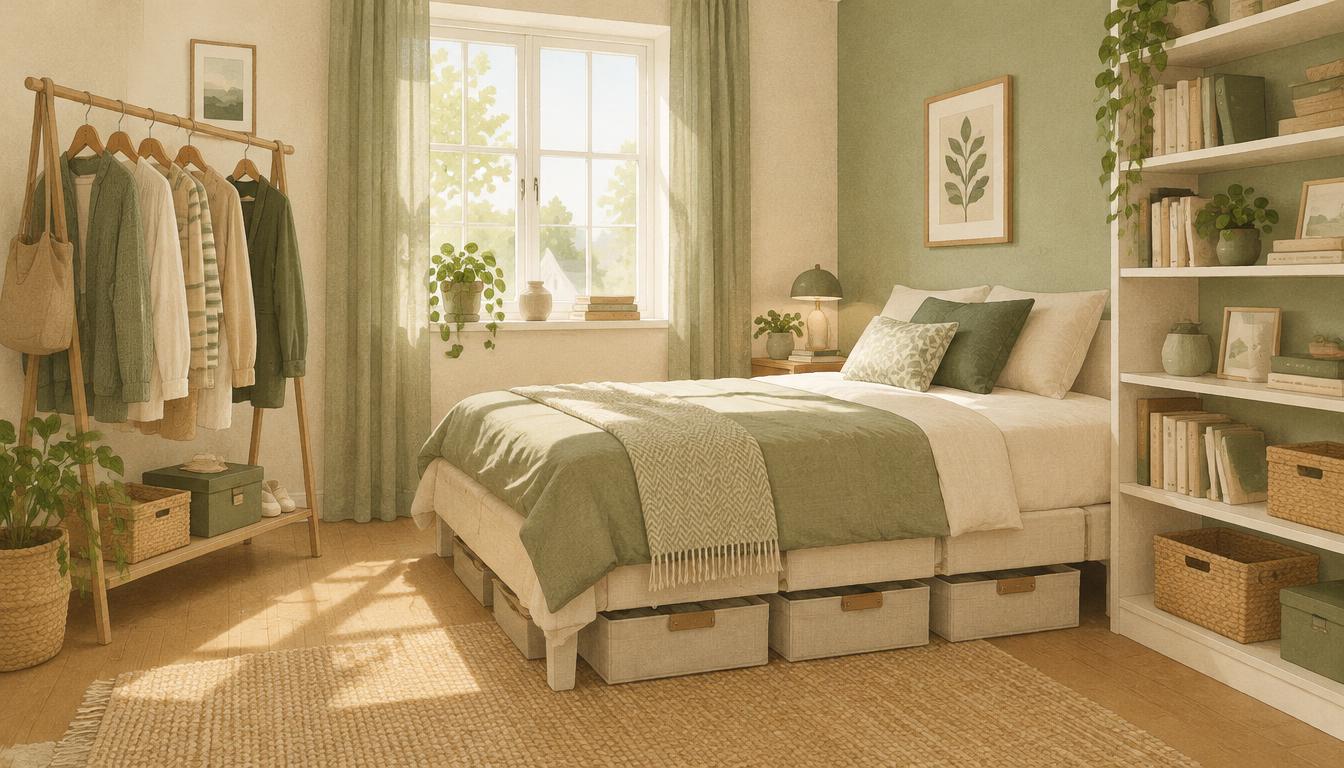
DIY Storage Ideas for a Bedroom With No Closet
Explore seven practical storage ideas for a bedroom without a closet, with options for hanging clothes, folded items and accessories, plus fitting and safety checks.
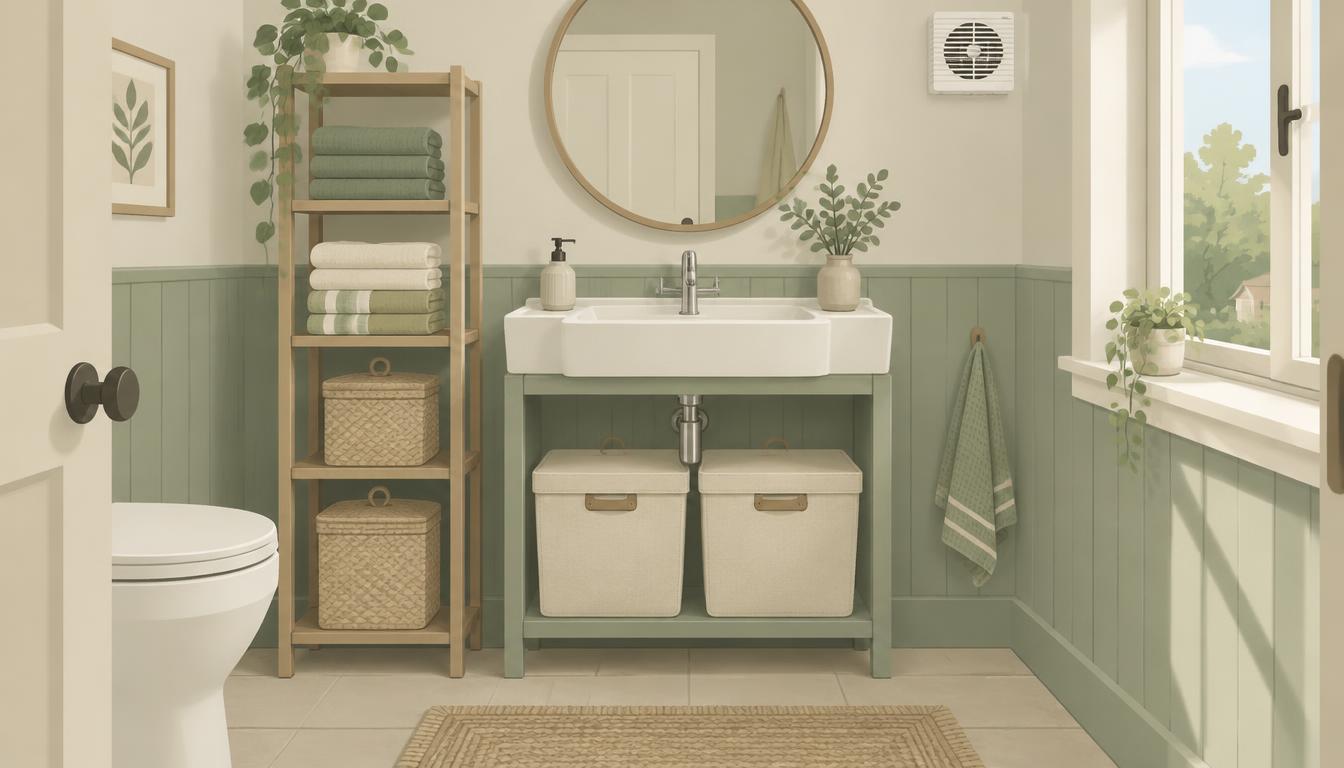
Small Bathroom Organisation: A Practical Planning Guide
A practical planning order for a small bathroom: clear, measure, group, choose damp-proof storage and check safety.
Make Room for What Matters
Download the free 7-day small-space decluttering checklist — no email address needed.